Anti-Wrinkle Treatment: What It Actually Does, and What It Doesn't
- Sarah Foley

- 14 hours ago
- 4 min read
There are plenty of misconceptions about anti-wrinkle treatment. Some people worry they'll end up looking frozen or expressionless. Others expect it to erase every sign of ageing completely. The reality sits somewhere in between, and when treatment is done carefully, it should look subtle and natural.
Anti-wrinkle treatment, using botulinum toxin, works by reducing specific muscle movement. The aim isn't to stop you looking like yourself. It's to soften the movement that contributes to lines, while protecting the expressions that make your face yours.
So how does botulinum toxin actually work?
In simple terms, your brain sends a signal to a muscle telling it to contract. Botulinum toxin temporarily interrupts that signal where the nerve meets the muscle. The muscle can still move, but its activity is reduced. Think of it as turning the volume down rather than switching the muscle off.
As the targeted muscle moves less, the skin sitting over it creases less too. That's why this treatment is best suited to dynamic lines, the ones that become more noticeable when you frown, raise your eyebrows or smile.
How is anti-wrinkle treatment different from dermal filler?
Anti-wrinkle treatment doesn't add volume. It doesn't physically fill a crease, and it isn't designed to freeze your face.
The effect is also temporary. Muscle activity gradually returns, and how long that takes varies from person to person and between treatment areas, which is something I'll talk through with you at your appointment.
Expression is worth protecting
One of the things I consider most carefully when treating the upper face is how much movement should remain.
Your expressions are part of what makes your face look natural. A smile, a raised eyebrow, a bit of movement when you talk, it all gives your face life. The aim isn't to eliminate every line at rest or remove every trace of movement. In most cases a more natural result comes from reducing excessive or unwanted movement while keeping appropriate expression.
This is where dosing and placement matter. Too little may not give the softening you were hoping for. Too much, or treatment placed in the wrong location, can affect surrounding muscles and alter the balance of the brow or the way your expressions read. The amount used should be individualised to your anatomy, your muscle strength and movement, and what you're actually hoping for.
For me, a good result isn't simply about having fewer lines. It's about looking rested, balanced and like yourself.
The most commonly treated areas of the upper face
The upper face tends to respond particularly well to anti-wrinkle treatment, because many of the lines here are strongly influenced by repetitive muscle movement. The three areas I treat most often are these.
Frown lines
These are the vertical lines between the eyebrows that appear when you frown or concentrate. The muscles responsible are relatively well defined, which makes this an area where reducing excessive movement can soften the lines and ease a tense appearance.
Forehead lines
These are the horizontal lines that appear when you raise your eyebrows. The forehead needs a particularly considered approach, because the muscles here also play an important role in eyebrow position. Treating the forehead isn't simply about removing every line. It's about balancing movement and maintaining a natural brow position.
Crow's feet
These are the lines that radiate from the outer corners of the eyes when you smile or squint. They're created largely by the movement of the muscle around the eye, so carefully reducing that movement can soften their appearance while still allowing a natural smile.
What happens during an appointment?
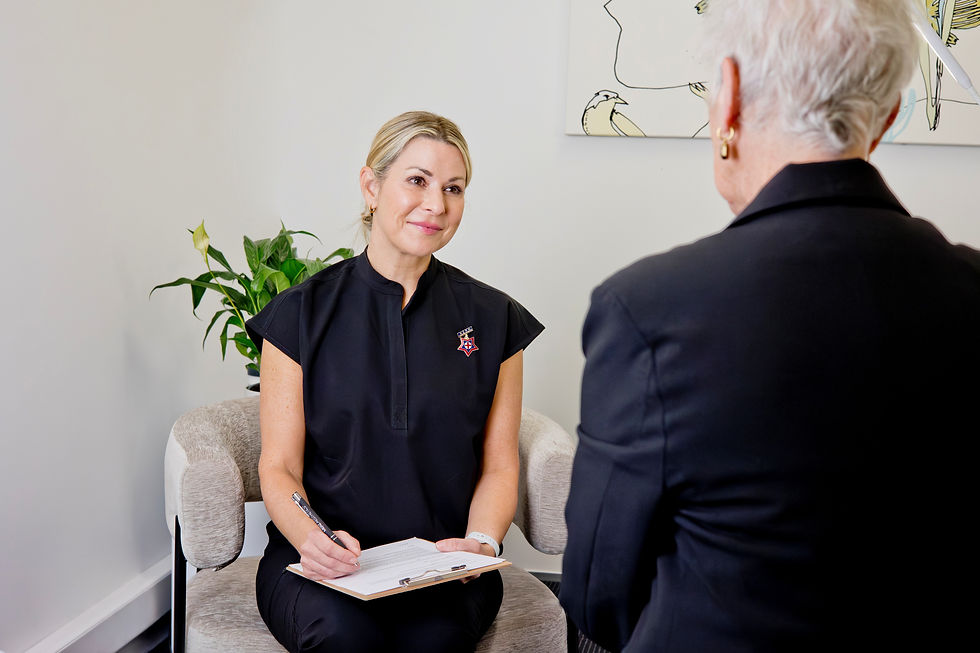
Your appointment starts with a consultation, not with a needle.
I'll look at your facial anatomy and how the muscles move in the areas that concern you. I'll ask what you're hoping to achieve and, just as importantly, what you don't want to change. If treatment is appropriate, the injections are done with a very fine needle, placing small amounts of product into carefully selected muscles.
Most people describe the sensation as a small sting rather than anything genuinely painful.
The treatment itself is relatively quick, usually around 10 to 20 minutes depending on how many areas are being treated. The appointment allows time for consultation, assessment, treatment and any questions you have. You don't need to set aside a large part of your day, and most people carry on with their normal activities afterwards.
What anti-wrinkle treatment doesn't do
It's just as important to understand the limitations.
It doesn't add volume. That's what dermal filler is designed to do. It doesn't permanently remove wrinkles, because the effect gradually wears off as muscle activity returns. It doesn't replace good skin care or sun protection.
It also won't necessarily soften lines that are deeply etched into the skin at rest. Lines caused by long term skin changes may need a different treatment or a combined approach.
And it doesn't have to mean a frozen face. Carefully planned treatment reduces movement while preserving natural expression.
When I might recommend waiting
Not everyone is a suitable candidate, and part of my job is to say so.
I may recommend postponing treatment if you have an infection or inflammation around the proposed injection site, or if there are medical factors that need to be considered first. A known hypersensitivity to botulinum toxin is a contraindication, as is pregnancy or breastfeeding.
If treatment isn't right for you at the moment, I'd far rather tell you that than proceed anyway.
The aim is less distraction, not less expression
Anti-wrinkle treatment is at its best when people notice that you look rested and softened, rather than immediately noticing that you've had something done. Your face should still look like your face, just a little softer.
If you'd like to talk it through
If you're thinking about anti-wrinkle treatment and you're not sure whether it's right for you, the best place to start is a conversation. Consultations at Studio Aesthetics are free, and there's no expectation that you'll have treatment on the day.
It's simply a chance to talk about what you're noticing, ask anything you're unsure about, and get an honest view from someone who will tell you if it isn't the right option for you.
Whenever you're ready, you're always welcome to book a consultation.


Comments